
MICG Sets Out Priorities For The Future Of The Advanced Ceramics Sector In The Midlands
Tuesday, 20 January 2026

15 January 2026
The Midlands Industrial Ceramics Group is setting out its priorities for the future of the advanced ceramics sector, to give a framework for the delivery of next-generation capability across the industry.
Members of the partnership have created a blueprint in their ‘Priorities for Action’ guide.
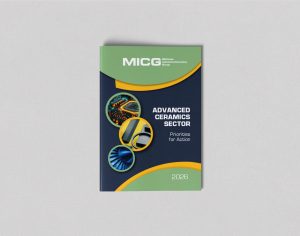
The 12-page report will provide the foundation for the MICG’s future partnership action plans, and used to communicate its priorities to government, funders and other stakeholders.
Dr Gilda Gasparini, of Midlands Industrial Ceramics Group, said: “The document outlines the strategic priorities and challenges faced by the MICG in moving the advanced ceramics sector forward.
“It highlights the group’s efforts to position the Midlands as a global hub for advanced ceramics through collaborative research, innovation, and industry partnerships.
“It also looks at key challenges, including high production costs, dependency on overseas materials, and the need for a skilled workforce.
“Additionally, the document emphasises the importance of on-shoring critical manufacturing and fostering a strong innovation ecosystem.”
MICG is made up of blue-chip companies including Rolls-Royce, Morgan Advanced Materials and Foseco, as well as SMEs including CDS, Lucideon, Mantec, PCL and Precision Ceramics – together with the universities of Birmingham, Nottingham, Leicester and Loughborough.
The partnership secured £18.27 million government funding, provided through UK Research and Innovation’s flagship Strength in Places Fund (SIPF), in October 2022.
With other investment, the five-year industrial and academic programme will be worth £42.1 million on completion in 2026.

Actions set out in the paper from the MICG to strengthen and growth the sector include a greater focus on promotion, enhancing efficiency and developing a talent pipeline through education and training initiatives, with a focus on industry-wide collaboration.
Dr Gasparini added: “Significant advances have been made during this period, but there is still much to do and the partnership recognises that working together is a more efficient way of tackling common challenges.”
More details about MICG can be found at https://micg.org.uk/
ENDS